10 Best Fitness Studio Software Solutions in 2025
8 September 2025
Favour Yusuf

The fitness software market hit $1.01 billion in 2024, yet most yoga instructors I know still manage their schedules using spreadsheets. After talking to dozens of gym and dance studio owners, we discovered something interesting. Most fitness studio management software is built for large gym chains and franchise operations.
This makes business sense since one chain might pay thousands in monthly fees, but it creates a problem for smaller operators. The vast majority of fitness studios are small, independent businesses that struggle to choose between expensive software packed with unnecessary features or sticking with their current mix of spreadsheets and manual systems.
The market is projected to reach $1.66 billion by 2030, growing at 8.58% annually, according to 360iResearch. This growth represents enormous potential for studios, but only if they can find tools with the right price and feature set for their actual needs.
While 94% of fitness centres and trainers use some sort of mobile apps as core parts of their operations, most studio and gym owners still struggle with actually extracting value from their often sizable software investments.
This guide compares the 10 best fitness studio software solutions that actually work for small to medium studios in 2025, with honest pricing, features, and user feedback to help you make the right choice.
What Every Fitness Studio Software Should Include
Before we start comparing specific platforms, you need to know which features actually matter for running a studio. Most software companies will overwhelm you with feature lists, but most studios only need a few core capabilities done really well.
Here are a couple of them
- Online Booking and Scheduling forms the backbone of any modern gym or dance studio's operations. Members need to reserve spots in classes without calling or texting you. The system should handle class capacity limits automatically, manage waitlists when classes fill up, and let you set up recurring weekly schedules without rebuilding them every month. Instructor scheduling and substitute management should be straightforward, not a puzzle that requires a manual.
- Payment Processing and Billing eliminates the biggest time sink for most studio owners. The software should process recurring membership payments automatically, handle class packages and drop-in fees, and deal with failed payments without requiring your intervention. Multiple payment methods and the ability to process refunds or adjustments keep money flowing smoothly. Transaction fees vary widely between platforms, so factor this into your total cost calculation.
- Member Management keeps your community organised and engaged. Basic customer profiles, attendance tracking, and simple communication tools let you build relationships with your members instead of just processing transactions. A member-facing mobile app or portal where people can manage their own accounts reduces your administrative workload significantly.
- Basic Reporting and Analytics help you understand your business without drowning in data. Revenue tracking, class attendance patterns, and member retention insights show you what's working. You don't need complex dashboards, just clear information about which classes are popular, how your revenue trends, and which members might need attention.
Now let's see which fitness studio software actually delivers these essentials and how they compare for different studio needs.
Top 10 Fitness Studio Software at a Glance
This comparison table shows how the leading fitness studio software platforms stack up on pricing, target audience, and key trade-offs. Use this to quickly identify which platforms match your budget and studio needs.
| Software | Starting Price | Best For | Key Strength | Main Limitation |
|---|---|---|---|---|
| MindBody | $159/month | Established studios | Comprehensive features + marketplace | Expensive, complex setup |
| PassM8 | $29/month | Independent studios | Simple setup, affordable | Lacks advanced features like belt tracking |
| Glofox | ~$100/month | Mobile-focused studios | Strong iOS app experience | High prices + lack of transparency |
| TeamUp | $99/month | Studios wanting bundled features | No hidden add-on fees | Costs increase with growth |
| Pike13 | $159/month | Complex programs | Specialised scheduling tools | Poor mobile app experience |
| Zen Planner | $99/month | CrossFit/martial arts | Industry-specific features | Dated interface, expensive add-ons |
| ClubReady | $149/month | Multi-location franchises | Enterprise-level tools | Steep learning curve |
| Vagaro | $23.99/month | Wellness hybrids | Consumer marketplace | Per-seat pricing; lacks fitness focus |
| Perfect Gym | €129/month | European operations | Comprehensive feature set | Custom pricing, limited US presence |
| PushPress | Free | New gyms on budgets | Free tier available | High transaction fees |
Each platform serves different studio types and budgets, so we will dive deeper into what each platform actually offers, how much they cost, and whether they're worth it for your studio.
Detailed Reviews of the 10 Best Fitness Studio Software
1. MindBody
Best for: Established studios that want access to a marketplace
MindBody dominates the fitness software space for good reason. It's the most comprehensive platform available, with everything from advanced scheduling to marketing automation and a massive consumer marketplace that can drive new clients to your studio. The ClassPass integration alone brings millions of potential customers to your doorstep.
The pricing reflects this comprehensiveness. Plans start at $159/month and can reach $699/month for larger operations, with no free trial and most features requiring annual contracts. However, for small studios, MindBody can feel overwhelming. The learning curve is steep, and you'll pay for dozens of features you might never use.
On G2, the app scores an average of 3.6 out of 5, with many users praising the robust feature set but criticizing the complexity and support quality. If you're a solo instructor or small studio, simpler alternatives will serve you better at a fraction of the cost.
Best for: Mid-to-large studios wanting comprehensive business management and marketplace exposure.
2. PassM8
Best for: Independent studios that want comprehensive features without enterprise complexity or high costs
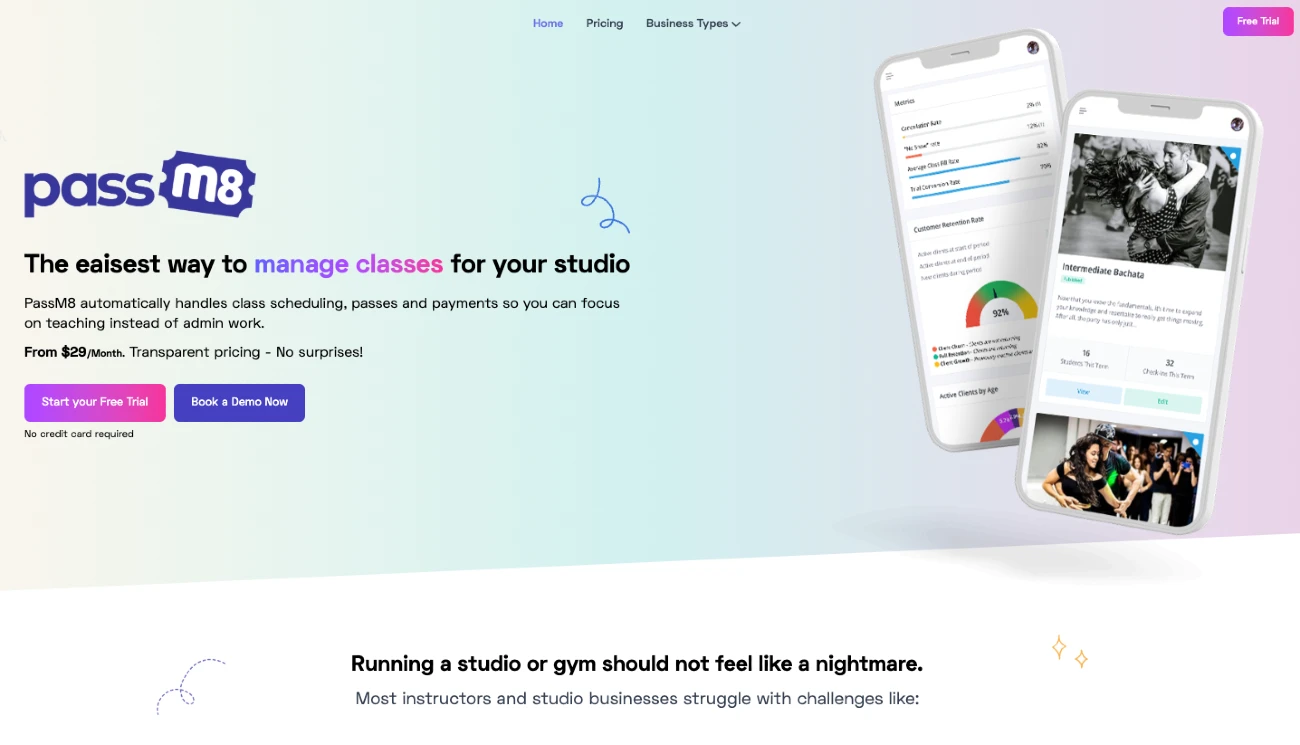
PassM8 takes a different approach than the enterprise-focused platforms. Instead of building for large gym chains, it's designed specifically for independent studios that need powerful features without the complexity. The platform handles core studio operations - scheduling, payments, member management, and marketing - in a system you can actually set up and use without an IT team.
This focused approach shows in the pricing: $29/month for all features, plus a 1.5% transaction fee that only applies when you make money. This pricing model means you're not paying hundreds monthly whether your classes are full or empty, which matters when you're running a small business with fluctuating revenue.
PassM8 is easy to setup, typically under an hour, and you can be ready to go within a day. Compared to other platforms that can take weeks to fully configure, this matters for small studios that can't afford extended downtime or lengthy learning curves. The "Choose Your Class" pass system guarantees your revenue upfront by automatically reserving student spots for entire terms. While other platforms make students manually book each session, PassM8 removes that friction for both you and your members.
In addition, PassM8 also has a family relationship management feature that links parent and child accounts, so you're not juggling separate payments and bookings for each family member. All these features work together to create a software that actually fits how small studios operate rather than forcing you to adapt to enterprise workflows.
Best for: Independent studios that want comprehensive features without enterprise complexity or high costs.
3. Glofox
Best for: Mid-sized studios with flexible budgets that prioritise mobile app aesthetics over pricing transparency
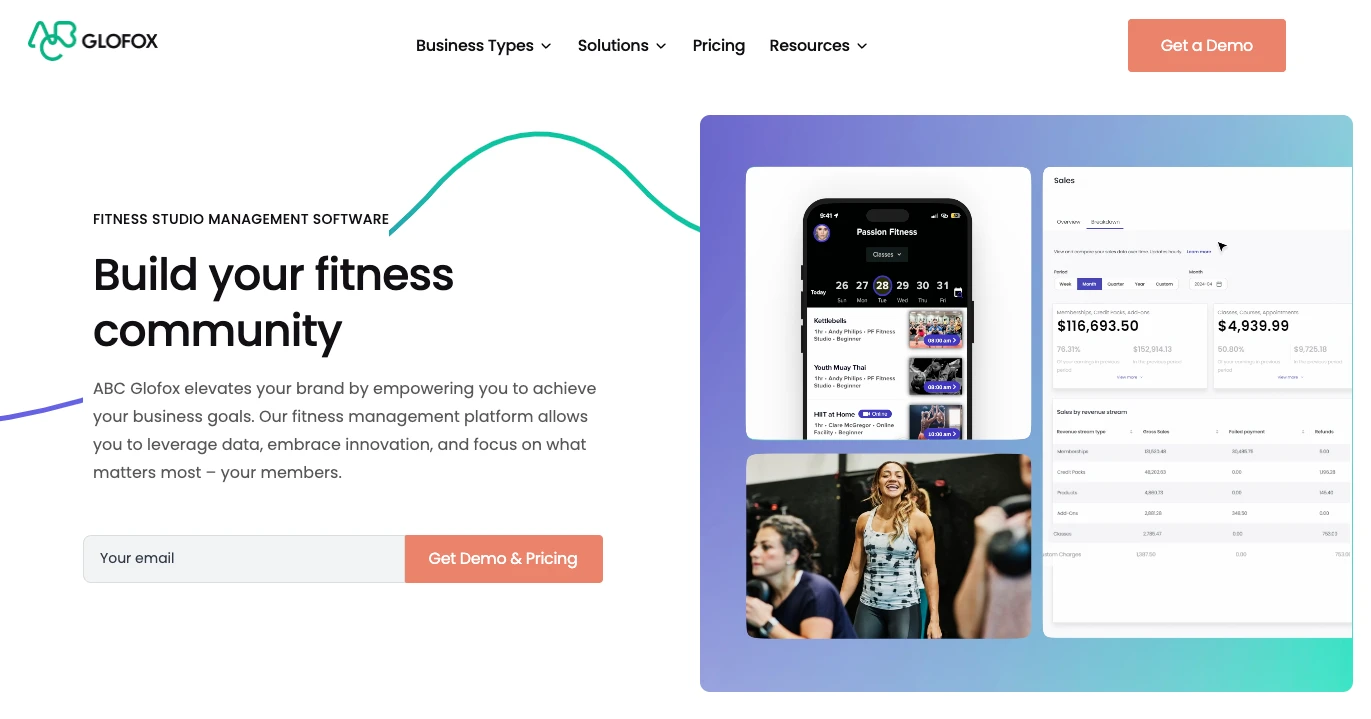
Glofox markets itself as a premium fitness software solution focused on mobile experience and brand elevation. They emphasise helping studios deliver polished customer experiences through modern interfaces and comprehensive member management tools.
The platform delivers on some of these promises. The member-facing mobile app handles bookings, payments, and communication smoothly, with solid integration capabilities for marketing automation and payment processing. However, the mobile experience varies significantly across platforms. While the iOS app scores 4.4/5, the Android version drops to 3.5/5, suggesting inconsistent execution of their core mobile-first promise.
Getting clear pricing proves nearly impossible with Glofox. Even review platforms like Capterra list pricing as "Contact vendor for price." Glofox offers what appears to be a pricing calculator on their website, but after filling out your information, you don't get prices. You get directed to book a demo call instead. Based on industry reports, costs appear to range from around $100 monthly for basic plans up to several hundred dollars for enterprise features.
For small studios, Glofox sits in an awkward position. The lack of transparent pricing creates unnecessary friction in the evaluation process, and the costs appear comparable to more comprehensive platforms without offering the same depth of features.
Best for: Mid-sized studios with flexible budgets that prioritise mobile app aesthetics over pricing transparency.
4. TeamUp
Best for: Studios with stable membership counts that prefer bundled features over modular pricing
TeamUp targets studios, gyms, and franchises with a comprehensive platform that includes scheduling, member management, payments, and communication tools. The platform bundles all features into their pricing tiers without charging extra for add-ons like branded apps or advanced reporting.
Pricing operates on a member-based model that ranges from $99 to $399+ monthly and scales with studio size. This tiered structure means costs increase as your membership grows, which can become expensive for successful studios. Unlike flat-rate pricing models, your software costs rise with your revenue.
TeamUp includes standard fitness software features like class scheduling, payment processing, member apps, and reporting. The platform also handles multi-location management and offers some marketing automation tools. These features cover most studio operational needs without requiring additional purchases.
User satisfaction ratings average around 4.8 out of 5 across G2, Capterra, and both mobile app stores, which suggests that users find the software reliable for daily operations, though they don't indicate whether the platform offers better value compared to lower-cost alternatives.
The member-based pricing structure works well for studios with stable, smaller memberships, but becomes costly as businesses grow. Studios need to factor in long-term costs as their member base expands.
Best for: Studios with stable membership counts that prefer bundled features over modular pricing.
5. Pike13
Best for: Complex programs needing specialised scheduling tools
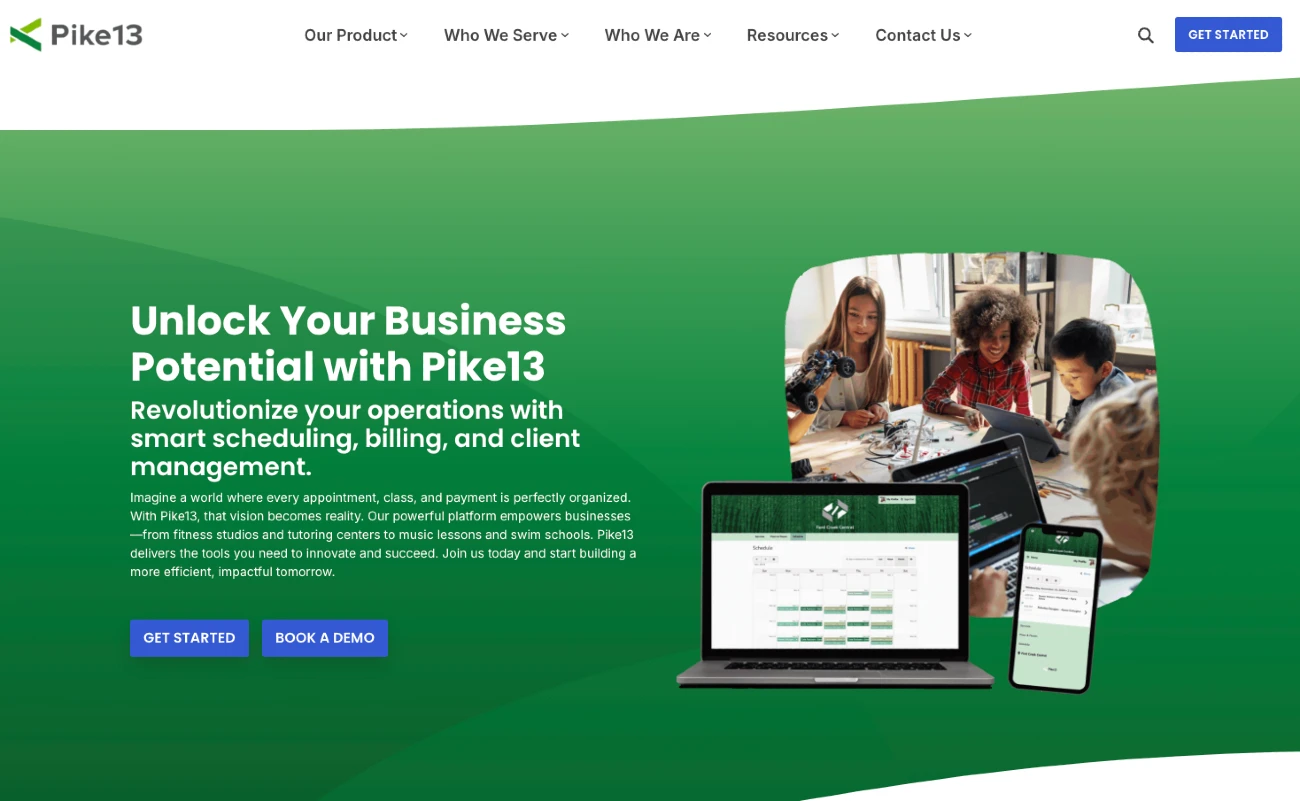
Pike13 targets specialized fitness businesses that operate differently from typical studios. Martial arts schools, swim schools, and gymnastics centres deal with student progression through skill levels, complex instructor scheduling, and detailed record-keeping requirements that standard fitness software wasn't designed to handle.
Plans range from $159 monthly for Essential features up to $286+ for Premium, with additional costs for branded apps, skill tracking systems, and retail management. The tiered pricing means specialised features often require higher-tier plans or costly add-ons, which can significantly increase total software costs.
The platform includes specific capabilities that address these operational complexities. Belt tracking for martial arts progression, detailed payroll calculations that account for different instructor rates and responsibilities, and multi-level class scheduling that manages students across various skill tiers. Pike13 also handles retail inventory management and family account billing for businesses that serve multiple family members.
However, the user experience seems to present significant challenges, with Pike13's consumer app having a 1.5 out of 5 on Apple's App Store and 2.3 out of 5 on Google Play. These low ratings suggest members face difficulties with booking and account management, creating friction for businesses that rely on mobile convenience.
Best for: Complex programs needing specialised scheduling tools.
6. Zen Planner
Best for: CrossFit gyms and martial arts schools needing specialised features
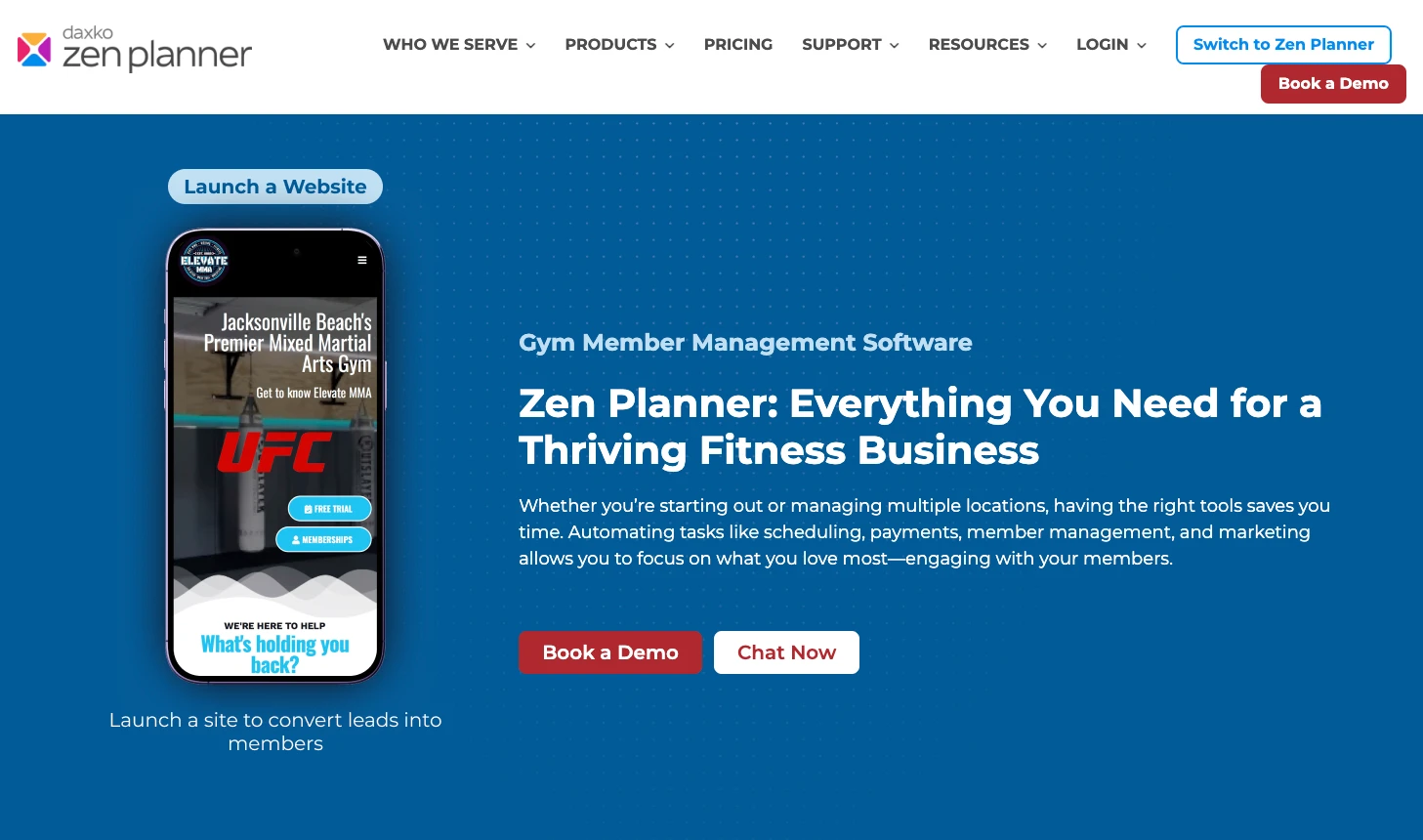
Zen Planner targets CrossFit gyms, martial arts schools, and traditional gyms that need industry-specific functionality alongside standard gym management. The platform positions itself as an all-in-one solution for fitness businesses that operate within these specialised communities rather than general boutique studios.
Pricing scales from $99 monthly for smaller gyms up to $289+ for larger operations based on active member count. However, essential features like advanced marketing tools cost an additional $249 monthly, and branded mobile apps add another $39 monthly. These add-ons can significantly increase total software costs beyond the base pricing.
The platform includes specialised features that matter to specific fitness communities. SugarWOD integration allows CrossFit gyms to track workouts directly within member profiles, while belt progression tracking serves martial arts schools. Zen Planner also handles standard operations like scheduling, billing, member management, and staff payroll calculations. The software includes basic marketing automation and reporting tools in the base plans.
User feedback reveals mixed experiences with Zen Planner. The platform scores 4.4/5 on G2 and 4.5/5 on Capterra, with mobile apps rating 4.6/5 on both platforms. However, users frequently mention the interface feels dated compared to newer platforms, and the pricing structure with expensive add-ons creates budget challenges for growing gyms.
Best for: CrossFit gyms and martial arts schools needing specialised features.
7. ClubReady
Best for: Multi-location franchises needing enterprise-level management
ClubReady targets franchise operations and high-volume fitness businesses that need enterprise-level sales, billing, and management capabilities. The platform focuses on businesses that operate multiple locations, handle large member volumes, and require sophisticated revenue tracking and performance analytics across their organisation.
Pricing ranges from $149 monthly for the Launch plan up to $499+ for the Orbit package, with enterprise features typically requiring custom pricing and significant onboarding fees. The cost structure reflects ClubReady's focus on larger operations that can justify higher software expenses through scale and revenue volume.
The platform includes advanced business management tools that smaller studios rarely need. Sophisticated sales pipeline management, enterprise billing capabilities, performance tracking displays for in-club motivation, and comprehensive franchise management tools. ClubReady also handles complex member management across multiple locations and provides detailed analytics for business owners managing large operations.
User reviews, however, show that there are some usability challenges. While ClubReady scores an average of 4.2/5 on G2 and 3.7/5 on Capterra for business functionality, the mobile apps struggle with 2.5/5 on Apple and 2.1/5 on Google Play. Users frequently mention the steep learning curve, outdated interface design, and cumbersome daily operations that require extensive training to navigate effectively.
Best for: Multi-location franchises needing enterprise-level management.
8. Vagaro
Best for: Studios offering wellness services beyond just fitness classes
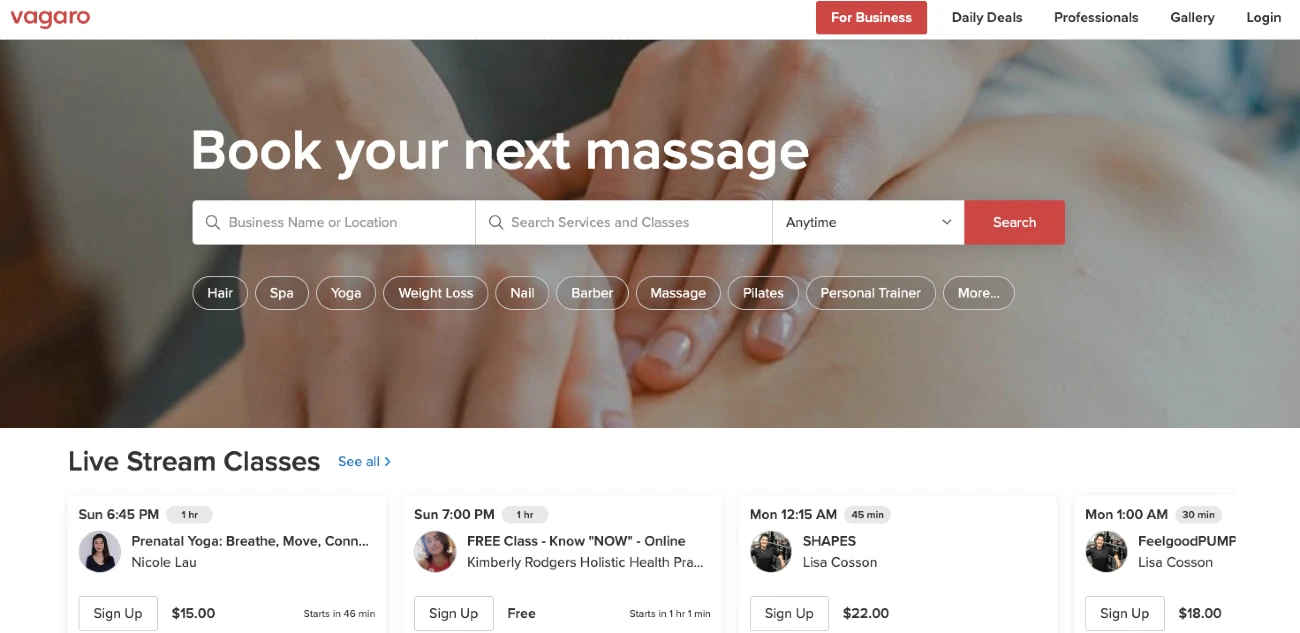
Vagaro targets businesses that blend fitness with beauty and wellness services rather than focusing exclusively on fitness classes. The platform serves spas, salons, and wellness centres that offer yoga classes alongside massage therapy, or studios that provide both fitness training and beauty treatments under one roof.
Pricing starts at $23.99 monthly but comes with significant limitations, like a single bookable calendar and just one user seats. Adding more instructors or locations increases costs quickly, which can make Vagaro expensive for studios with multiple staff members or class types. The per-seat and per-location pricing structure means costs scale rapidly as your business grows.
The platform includes comprehensive booking and payment features that work across different service types. Vagaro handles appointment scheduling for both classes and individual services, manages different pricing structures for various treatments, and processes payments for mixed-service bookings. The software also includes a consumer marketplace where potential clients can discover and book services by location, providing businesses with access to new customers beyond their existing client base.
Publicly available user feedback shows mixed experiences with Vagaro, with the platform receiving around 3.5 out of 5 across review platforms, with users noting that while it handles multi-service businesses well, it lacks the specialised fitness features that dedicated fitness software provides. Studios focused primarily on fitness classes often find the platform too broad for their specific operational needs.
Best for: Studios offering wellness services beyond just fitness classes.
9. Perfect Gym
Best for: European-based studios that need comprehensive software features
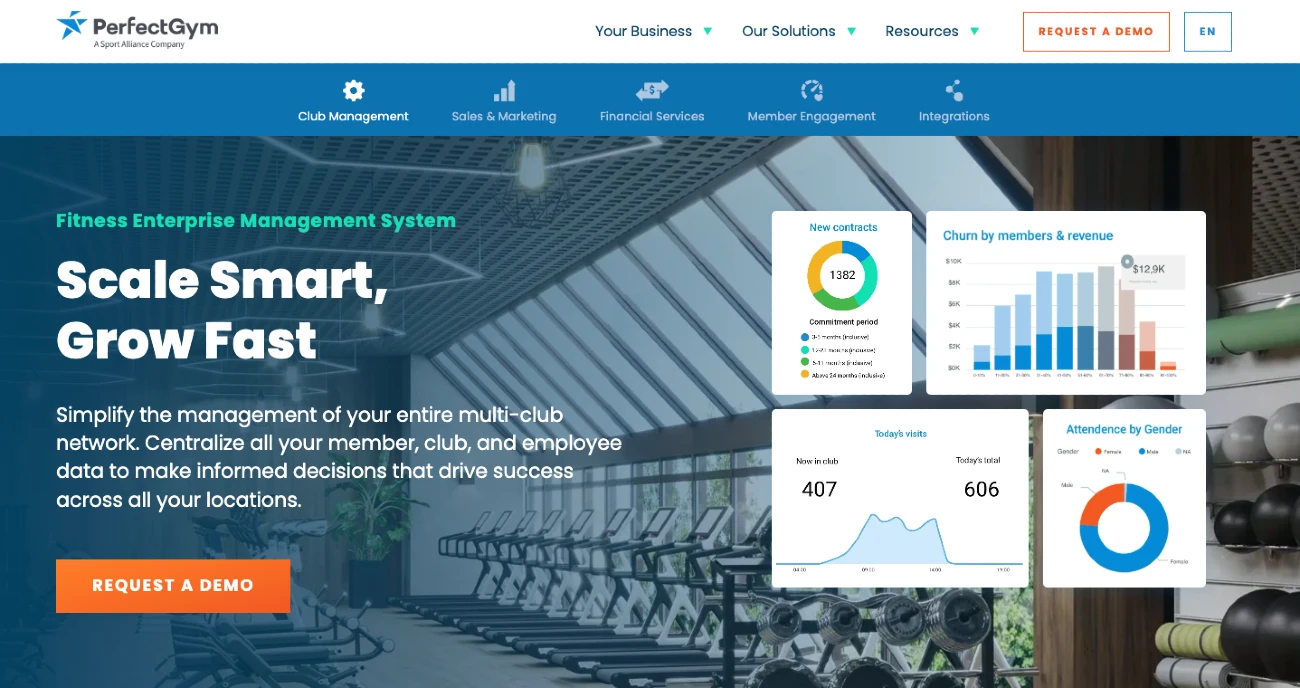
Perfect Gym operates primarily in European markets and targets larger fitness operations that need comprehensive management capabilities. The platform serves gyms, fitness chains, and studios that require extensive feature sets and can handle more complex software implementations.
Pricing follows a custom model that requires consultation calls to determine costs, with no publicly available rates on their website. This approach forces potential customers to book demos before understanding software costs, making it difficult for smaller studios to budget or compare options effectively. However, industry reports suggest costs start around €129-179 monthly for basic plans and can reach €575+ per club for comprehensive features.
The platform includes extensive business management features across scheduling, member management, payments, marketing automation, and detailed analytics. Perfect Gym handles multi-location operations, complex billing scenarios, and provides robust reporting capabilities designed for larger fitness businesses. The software also includes advanced marketing tools and integration capabilities for businesses that need sophisticated operational control.
User feedback varies significantly based on business size and location. The platform receives positive reviews from larger European operations that utilise its comprehensive feature set, but smaller studios often find the complexity overwhelming.
Best for: European-based studios that need comprehensive software features.
10. PushPress
Best for: New gyms starting with basic needs and tight budgets
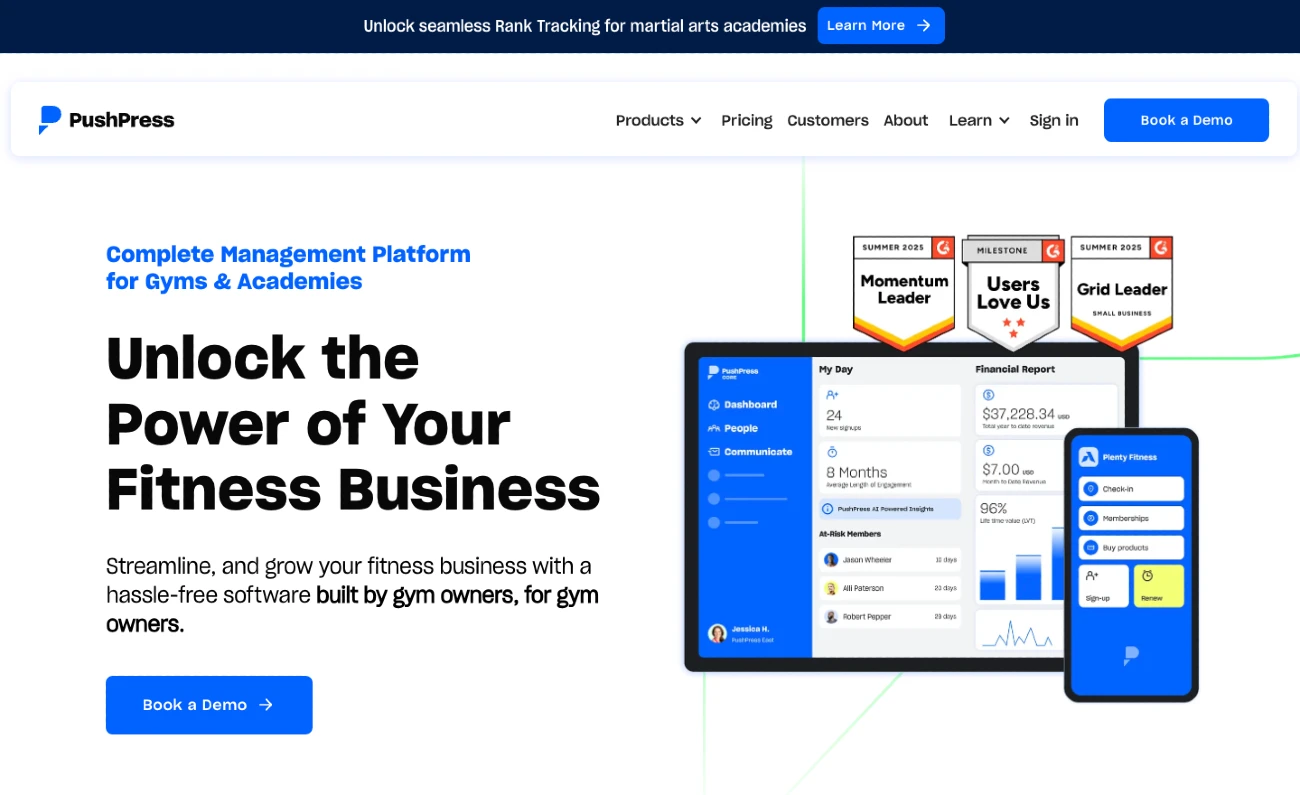
PushPress targets gym owners with a freemium approach, offering a completely free plan alongside paid tiers. The platform positions itself as "hassle-free software built by gym owners, for gym owners."
Pricing starts with a free plan that includes basic scheduling and member management, though it comes with transaction fees of almost 5%. Paid plans range up to $229 monthly with reduced transaction fees down to 2.75%. Additional features like branded mobile apps cost $81+ monthly, while advanced CRM capabilities could add up to $329 monthly to your total costs.
The platform covers essential gym operations including class scheduling, member management, payment processing, and basic reporting. PushPress handles recurring billing, waitlist management, and provides mobile apps for both gym owners and members. The free tier gives new gyms access to core functionality without upfront software costs, though the higher transaction fees can become expensive as revenue grows.
User feedback consistently rates PushPress highly across platforms, with 4.7/5 on G2 and 4.8/5 on mobile app stores.
Best for: New gyms starting with basic needs and tight budgets.
Frequently Asked Questions About Fitness Studio Software
What's the difference between transaction fees and monthly fees?
Transaction fees are charged as a percentage of each payment processed (typically 1.5-4.19%), while monthly fees are fixed costs regardless of revenue. Lower monthly fees often come with higher transaction fees. Calculate both costs based on your expected revenue - high-volume studios usually save money with higher monthly fees and lower transaction rates.
How long does it take to switch fitness studio software?
Most platforms can be set up within 1-7 days, but data migration from your current system can take 2-4 weeks depending on complexity. Simple studios with basic scheduling often switch faster, while studios with extensive member histories, class packages, and custom settings need more time. Plan the switch during slower periods to minimise disruption.
Do I need a branded mobile app for my studio?
Branded apps cost $39-99+ monthly and aren't necessary for most small studios. Generic apps (like the MindBody consumer app) work fine for booking and payments. Consider a branded app only if you have a strong brand identity and over 200 active members who would use it regularly.
What should I ask during software demos?
Focus on your daily workflows: how you handle class cancellations, process refunds, manage waitlists, and communicate with members. Ask about data export capabilities, contract terms, and total costs including transaction fees and add-ons. Request a trial period to test the software with real operations before committing.
Finding Your Perfect Fitness Studio Software Match
Choosing the right fitness studio software comes down to matching your specific needs with the right platform capabilities. Small independent studios typically get the best value from PassM8 or TeamUp, while established operations might justify MindBody's comprehensive features and marketplace access. Specialised businesses like martial arts schools should consider Pike13 or Zen Planner despite their limitations.
The most important factor isn't which platform has the most features, but which one actually fits how your studio operates. A simple, reliable system that your team will actually use beats a complex platform that sits half-empty.
Ready to see how PassM8 can simplify your studio operations? Start your free trial today and experience fitness studio software built specifically for independent studios like yours.
* This comparison is based on publicly available information gathered on 8 September 2025. Pricing and features change frequently—please verify with each vendor. All trademarks are the property of their respective owners.
Favour Yusuf
Lead Marketing Strategist, PassM8
Favour is PassM8’s lead marketing strategist, passionate about helping studios spend less time on admin and more time building thriving communities.